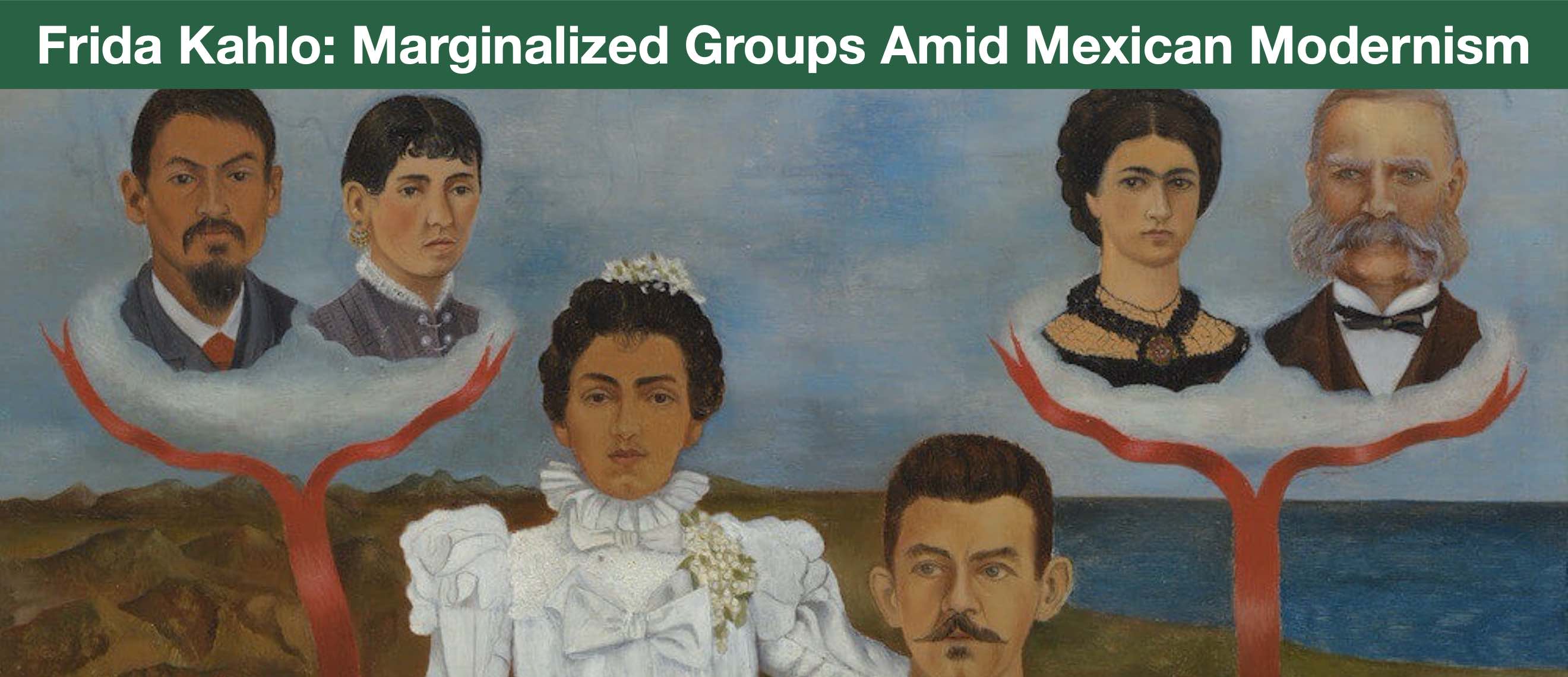
Indigenous People ~ "My Grandparents, My Parents and Me"
After the Revolution, the government offered funding to encourage artists to expand ideals concerning the new republic. Through her art, Kahlo facilitated a turning point by showcasing the marginalized indigenous people of Mexico. In keeping with Mexican Modernism, she incorporated native clothing, flora, fauna, and Aztec symbols in her paintings to portray the essence of Mexico.
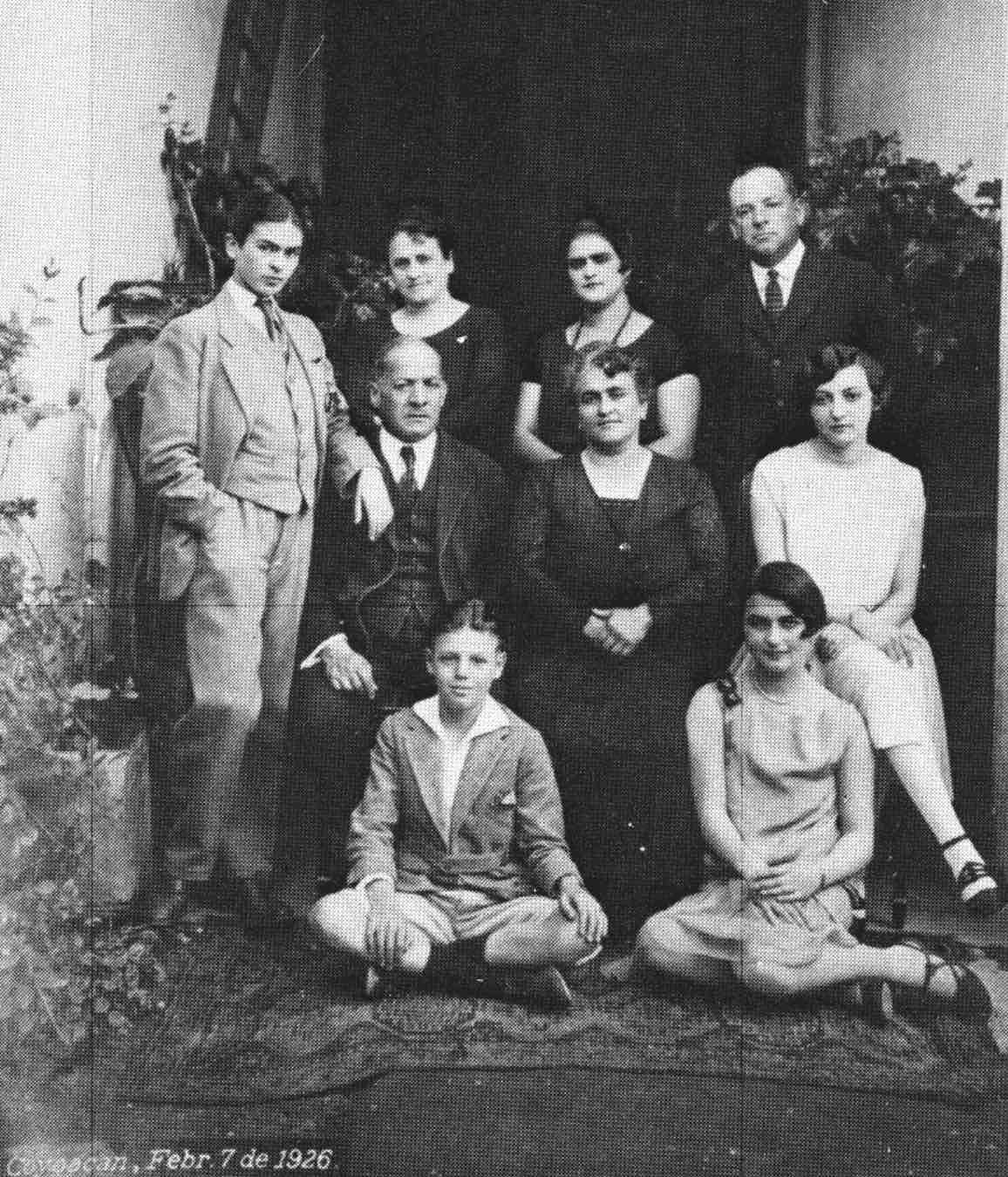
“Frida (standing, left, wearing a man’s suit) with members of her family,” from “Frida” by Herrera, photo credit: Guillermo Kahlo, 1926
Frida Kahlo, daughter of German photographer Guillermo Kahlo and Mexican Matilde González, participated in Mexican and European traditions.
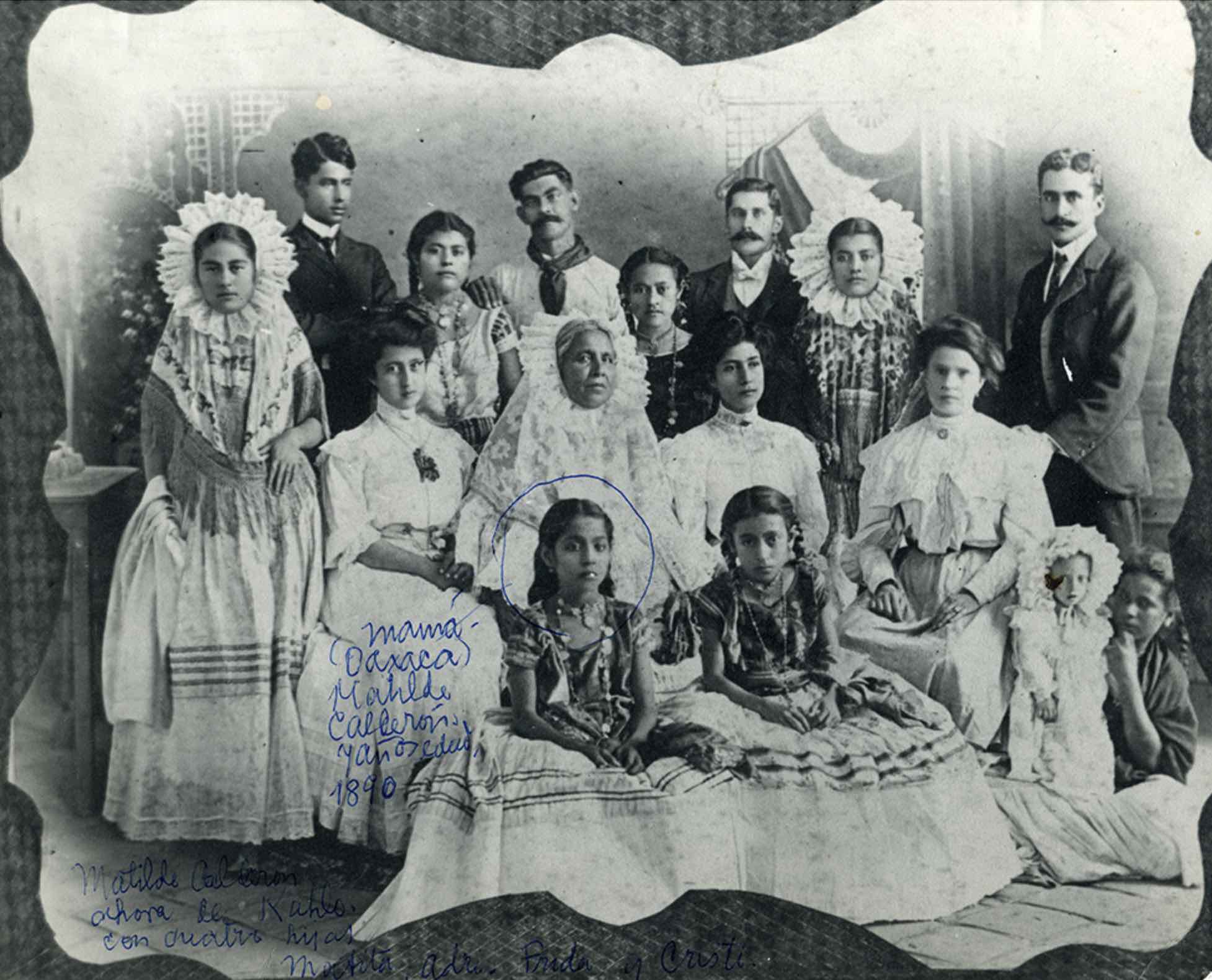
“Family of Matilde Calderón González” photo credit: Ricardo Ayulardo, 1890
Mrs. Rivera is accompanied by her younger sister, Christina… Christina wears conventional clothes, but Mrs. Rivera sticks to the Tehuantepec costume and got asked if she was a fortune-teller when she was on the subway the other day. - The New Yorker, 1938
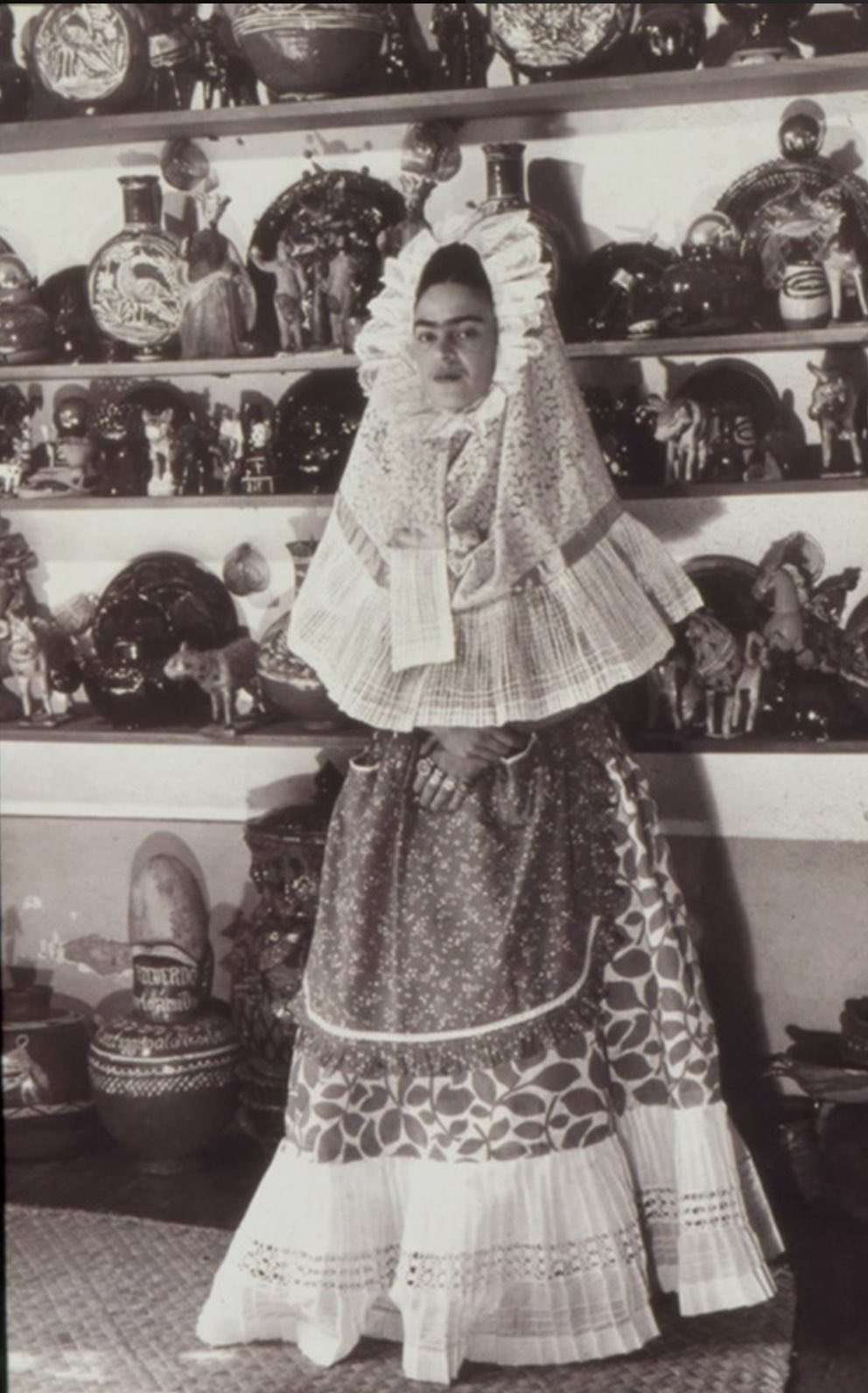
“Frida wearing a Tehuana headdress…This ceremonial headdress derived from a petticoat found in a woman’s trunk lost in a shipwreck. The Tehuantepec natives thought the petticoat should be worn on the head.” c.1940 from “Frida” by Herrera
The natives of Tehuantepec lived in matriarchal societies. Drawn to the independence of the Tehuana women, Kahlo used their clothing to represent indigenous people. Although some have criticized Kahlo, claiming she appropriated this culture, her maternal family wore the same clothing style.
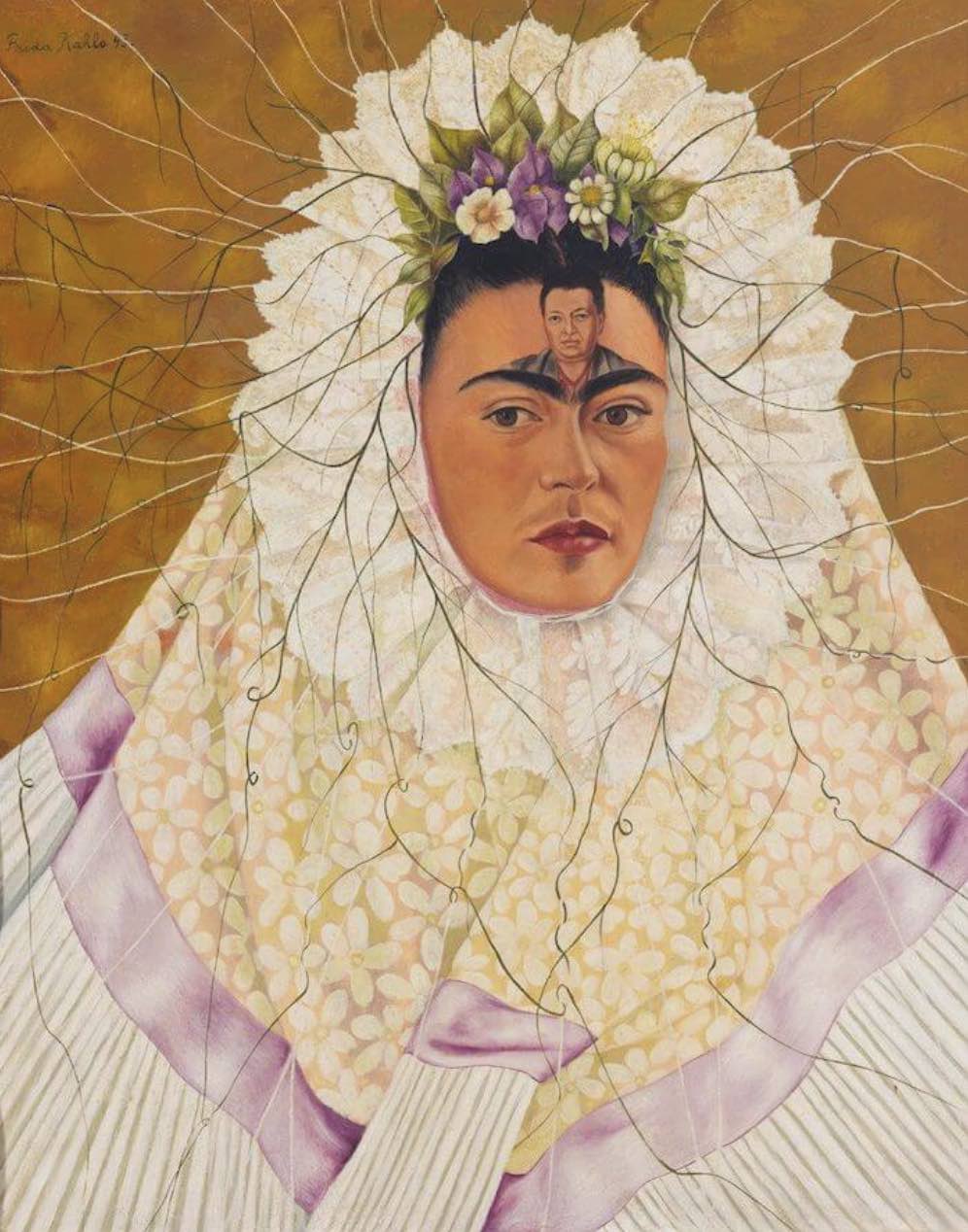
“Self Portrait as a Tehuana,” Frida Kahlo, 1943
“The classic Mexican dress has been created by people for people. The Mexican women who do not wear it do not belong to the people, but are mentally and emotionally dependent on a foreign class to which they wish to belong, i.e., the great American and French bureaucracy.” - Diego Rivera, n.d.
Kahlo wearing indigenous dress and hairstyle
Credit: fridakahlo.org, n.d.
Frida’s Mexican attire contrasted her culture with the United States during the Great Depression. She also showed the divide between wealth (top) and poverty (bottom).
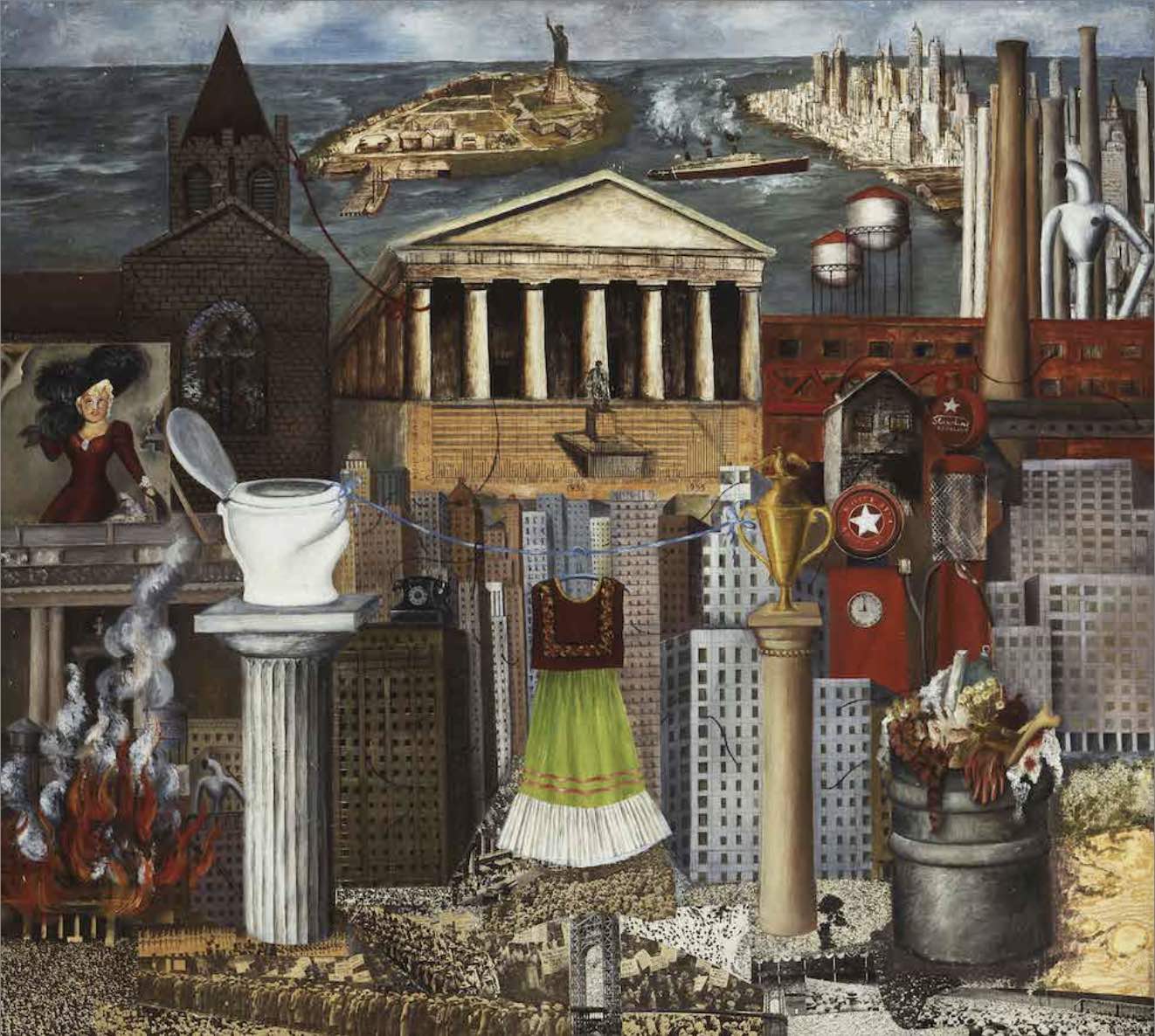
“My Dress Hangs There,” Frida Kahlo, 1933
Kahlo portrayed dual cultures by painting Mexican and European dresses.
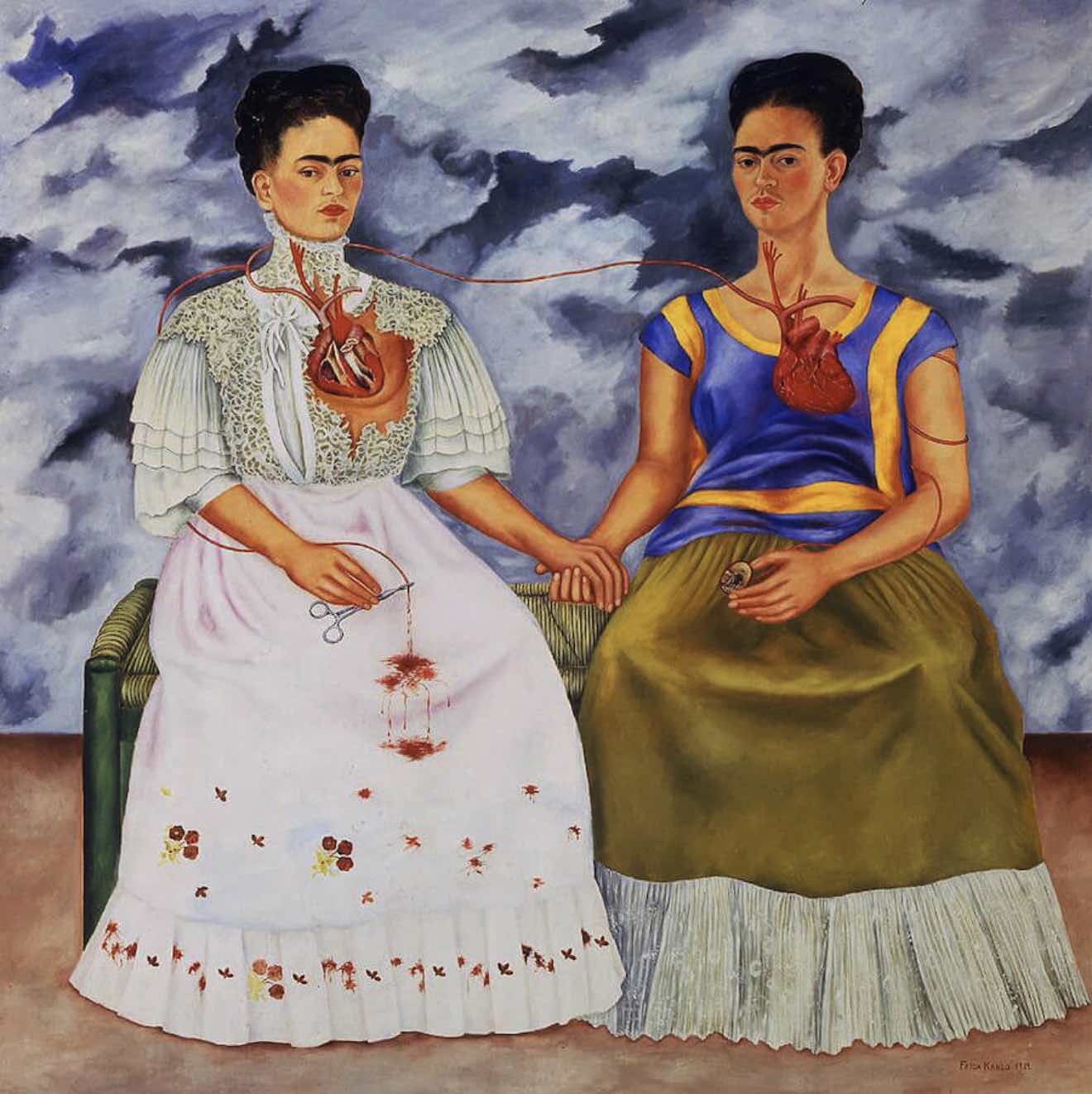
“The Two Fridas,” Frida Kahlo, 1939
When Kahlo traveled, she wore native clothes to spread her culture throughout different countries.
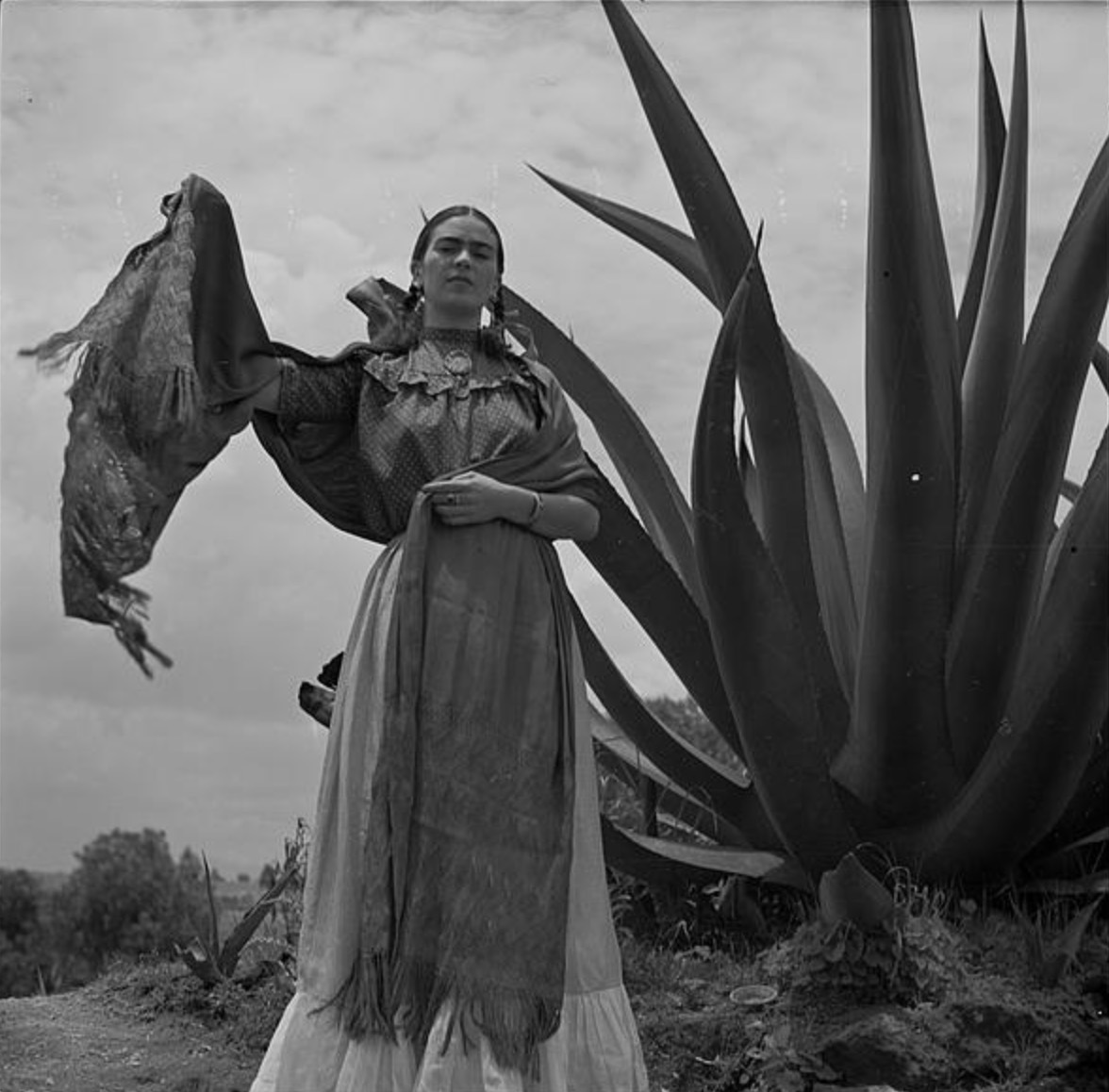
Photo credit: Vogue magazine, "Senoras of Mexico" 1937, via The Library of Congress
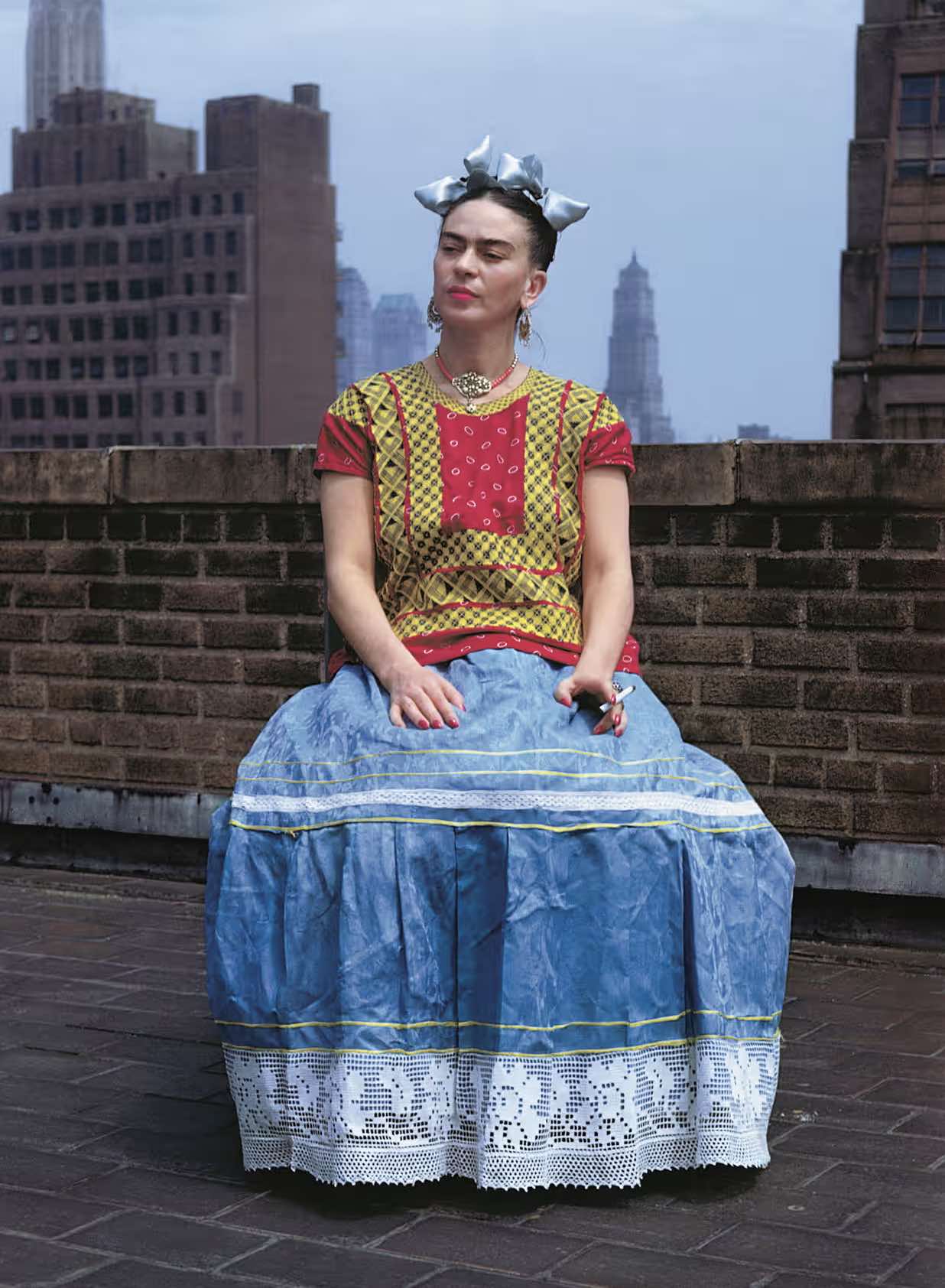
"Frida in New York," photo credit: Nickolas Muray, 1938
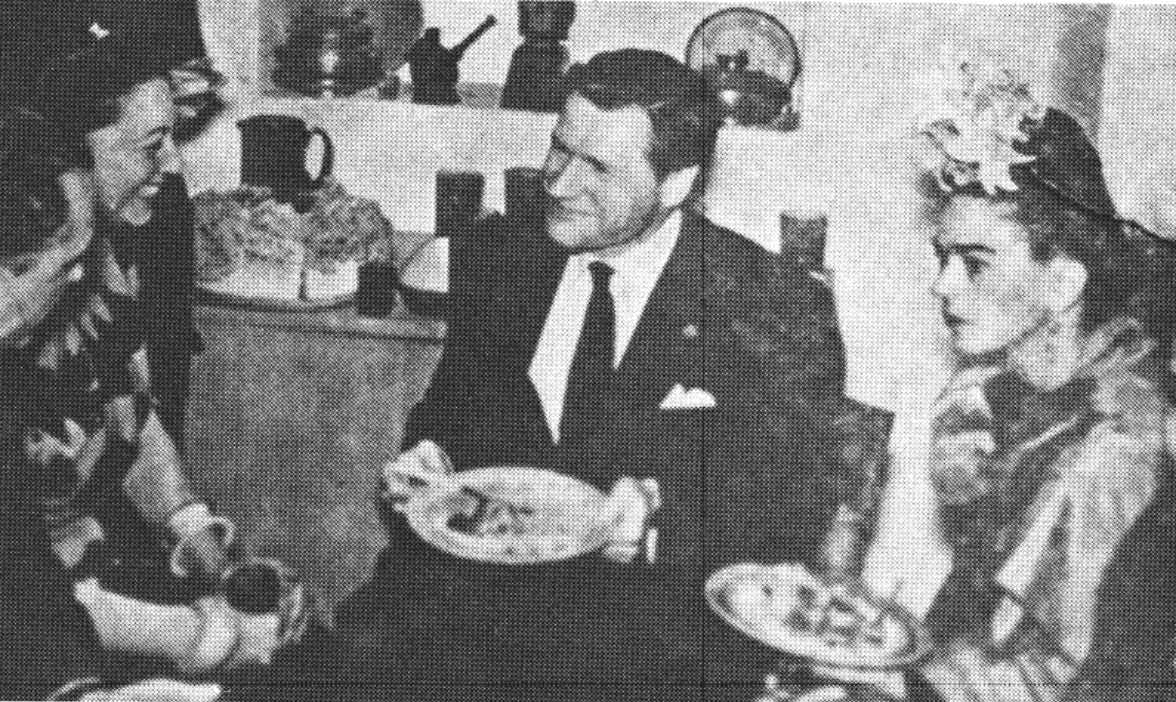
“With Nelson Rockefeller…” 1939, from “Frida” by Herrera
“…Frida and I were invited by [Henry] Ford to a party... Frida, looking lovely in her Mexican costume, soon became the center of attraction. Ford danced with her several times.” - Diego Rivera, 1932
This painting contains Aztec symbols: the hummingbird (symbol of the god Huitzilopichtil) and thorns used by Aztec priests. Kahlo focused on Aztec culture since it was the last independent indigenous group, and she desired independence for modern Mexico.
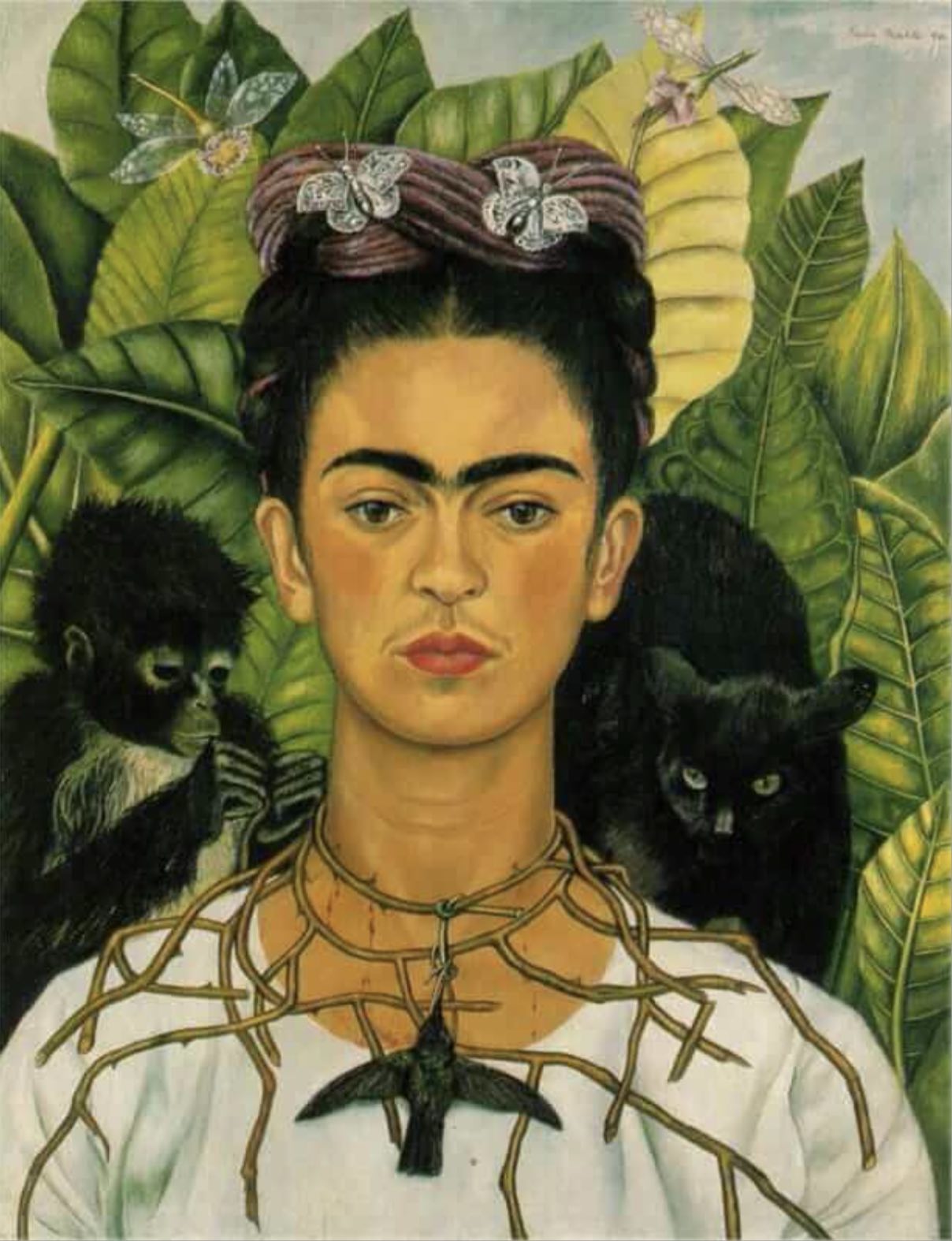
“Self-Portrait with Thorn Necklace and Hummingbird," 1940
“I wish to be worthy, with my paintings, of the people to whom I belong and to the ideas which strengthen me.” - Frida Kahlo, n.d.
During Mexican Modernism, artists brought attention to indigenous people. Indigenous culture is now celebrated in Mexico and popularized worldwide - especially images of Kahlo herself.
“The artistic liberation of Mexico runs parallel to the social and political revolution of the nation itself. The Mexican social temper is probably reflected more in the art of its people than that of any other nation.” - Herbert Kubly, Sun-Telegraph Art Editor, 1941
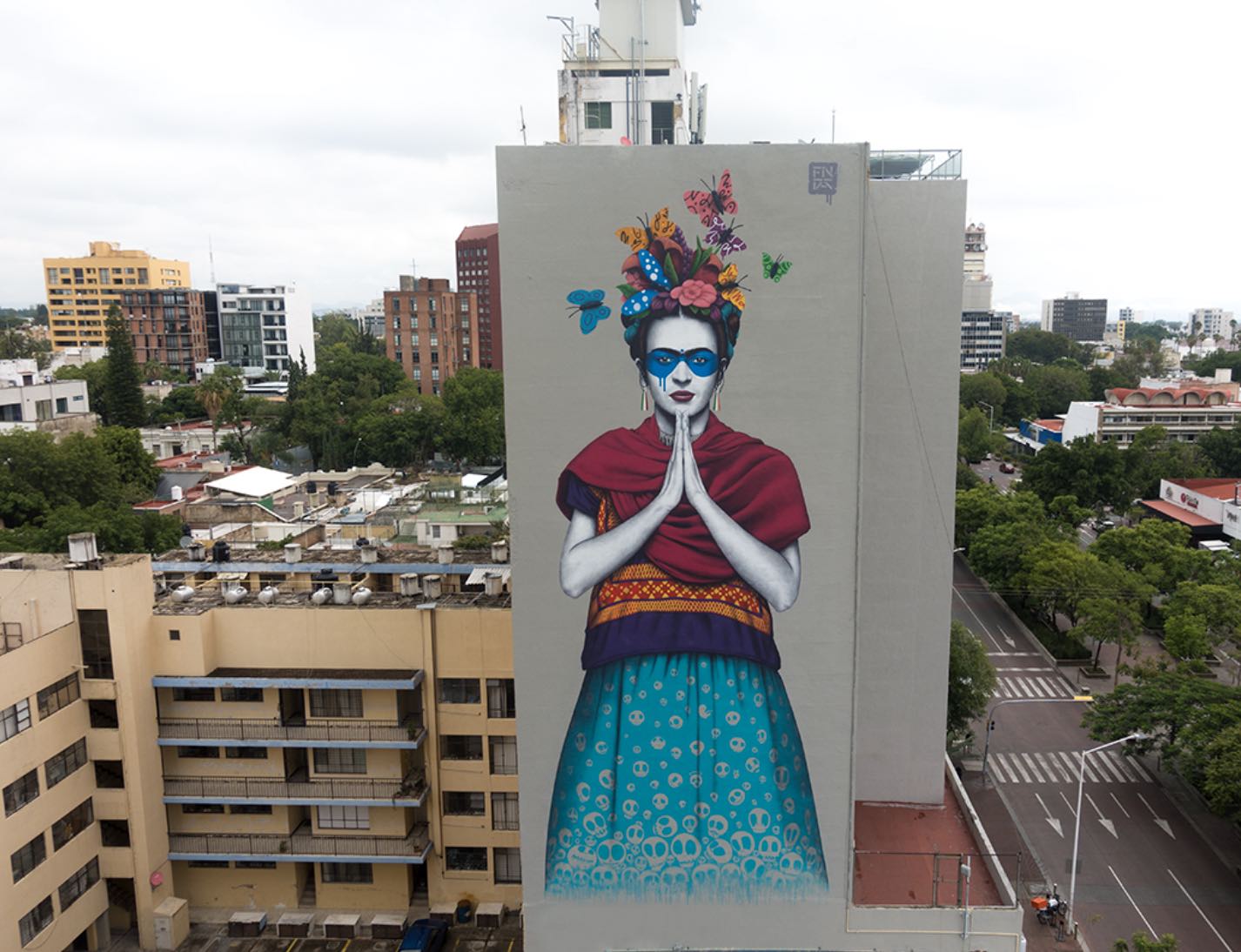
“Magdalena,” by Fin DAC, Guadalajara, Mexico, 2019
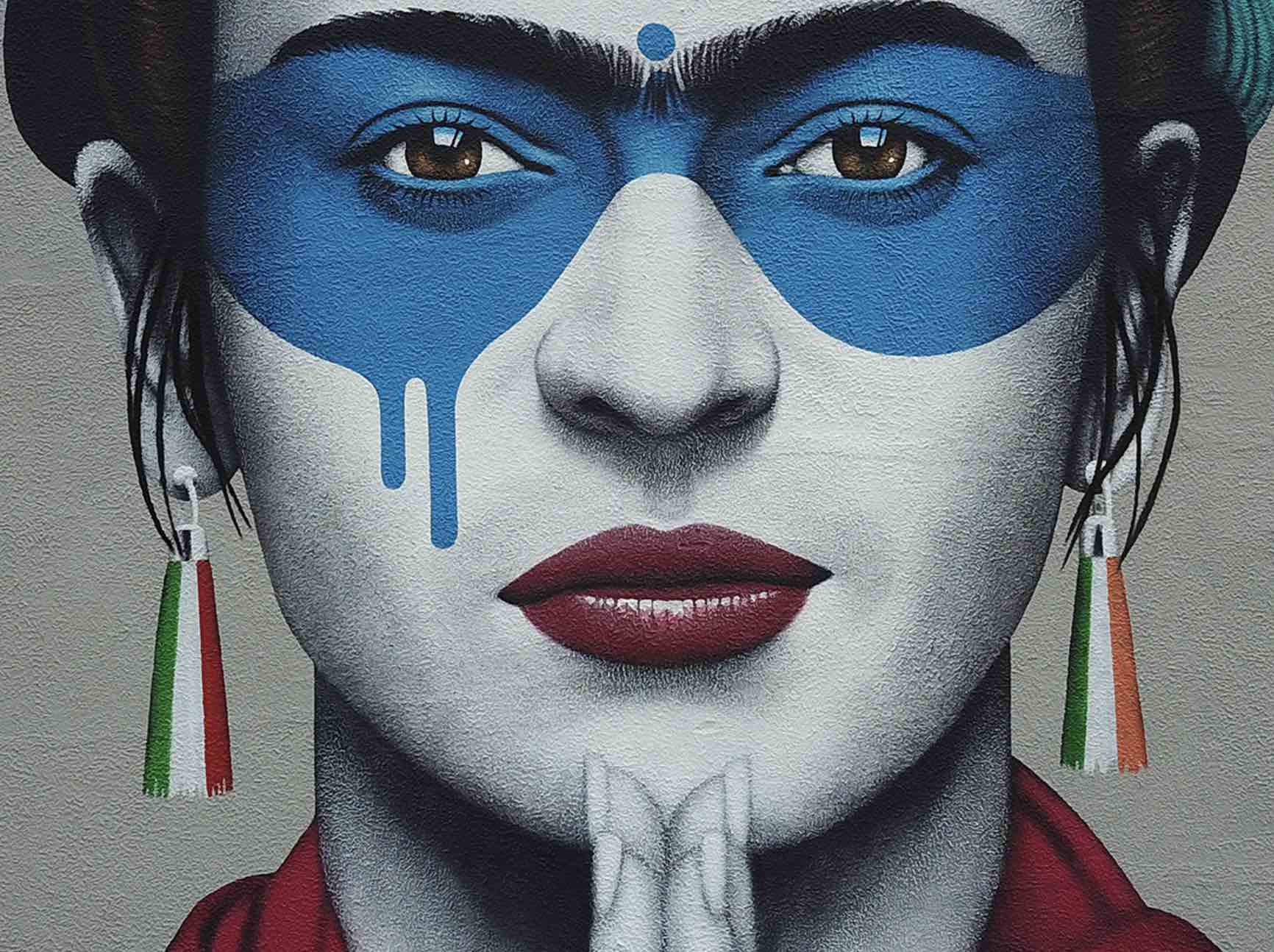
“Magdalena,” by Fin DAC, Guadalajara, Mexico, 2019
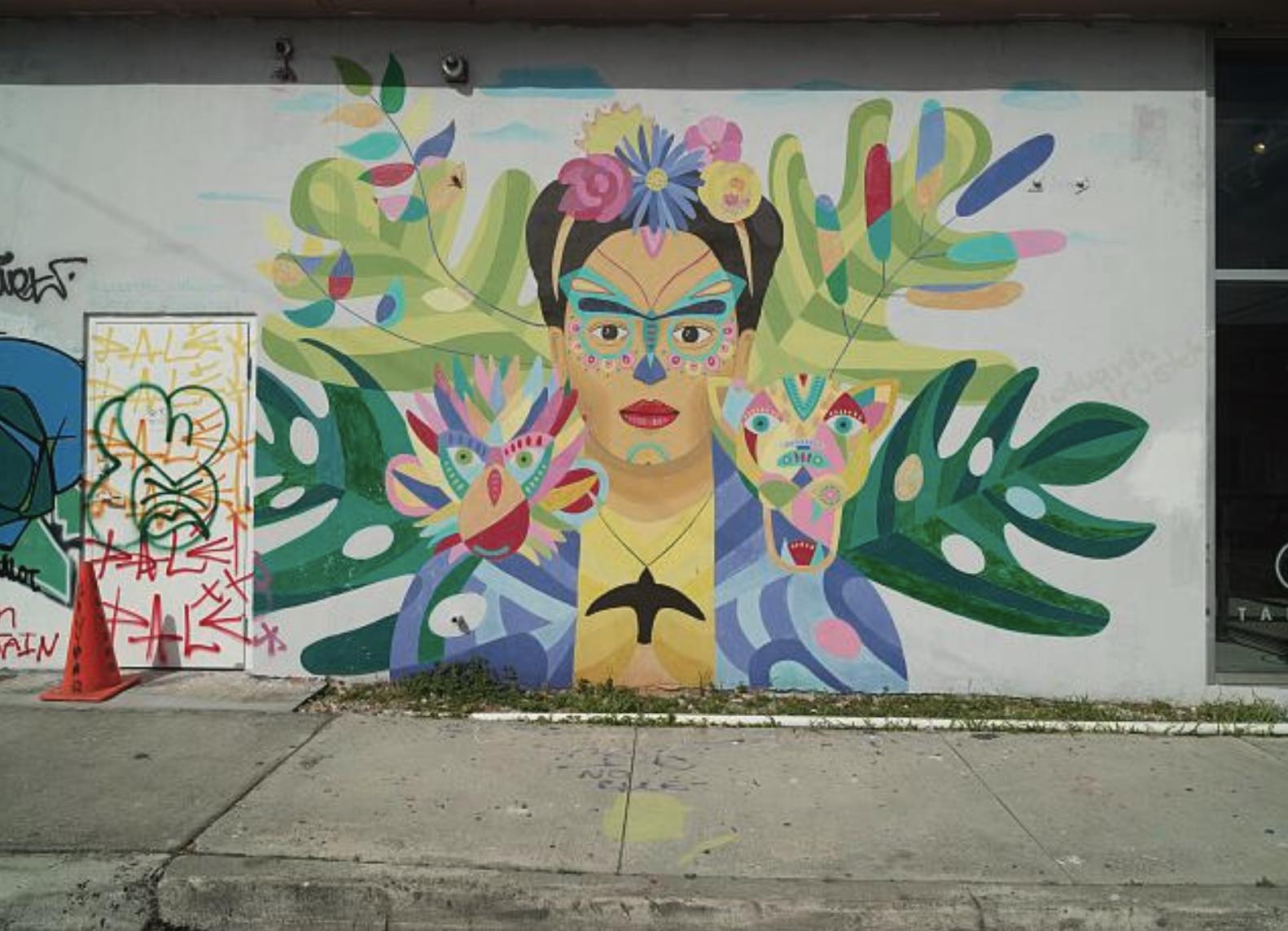
Created by Lourdes Villagomez and Jenaro de Rosenzweig, Miami, Florida, Courtesy: Library of Congress, 2020
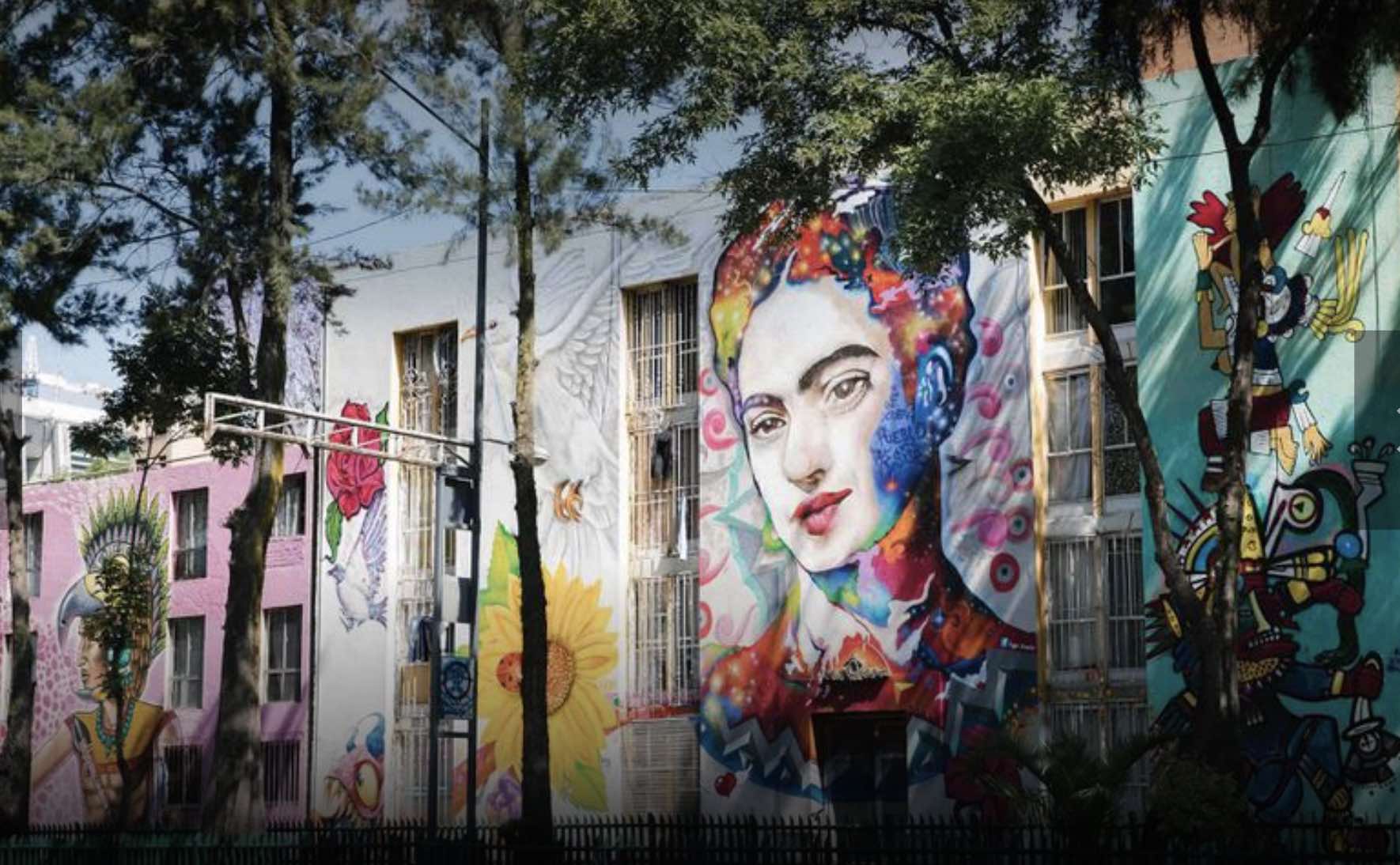
“Mural of Frida Kahlo on an apartment building near the Biblioteca Vasconcelos,” photo by Jessica Sample, Mexico City, Mexico, 2021
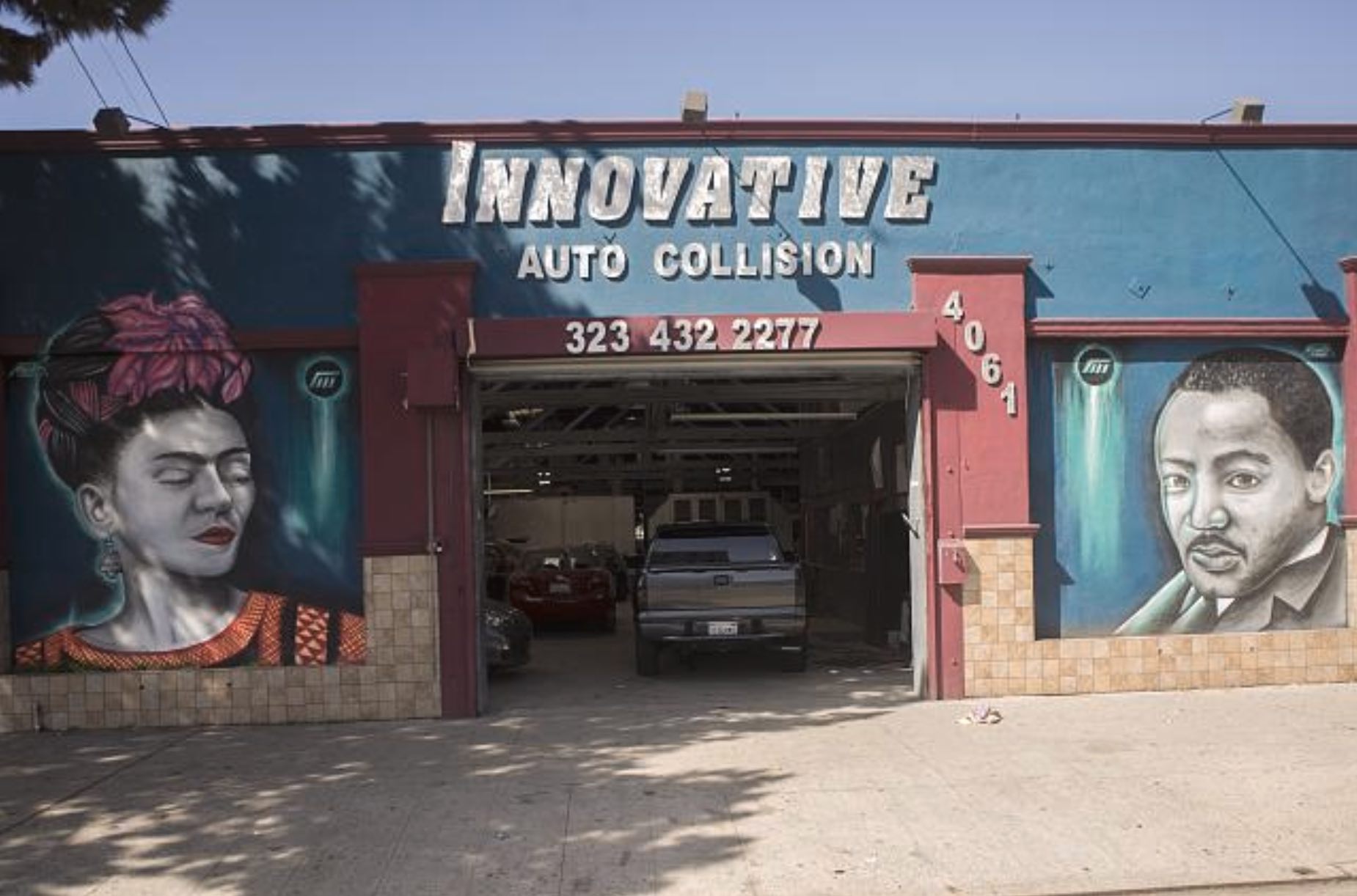
“MLK Jr. and Frida Kahlo, 4061 S. Broadway,” Los Angeles, CA, Courtesy: Library of Congress 2016
Header artwork credit: Frida Kahlo, “My Grandparents, My Parents and Me,” 1936