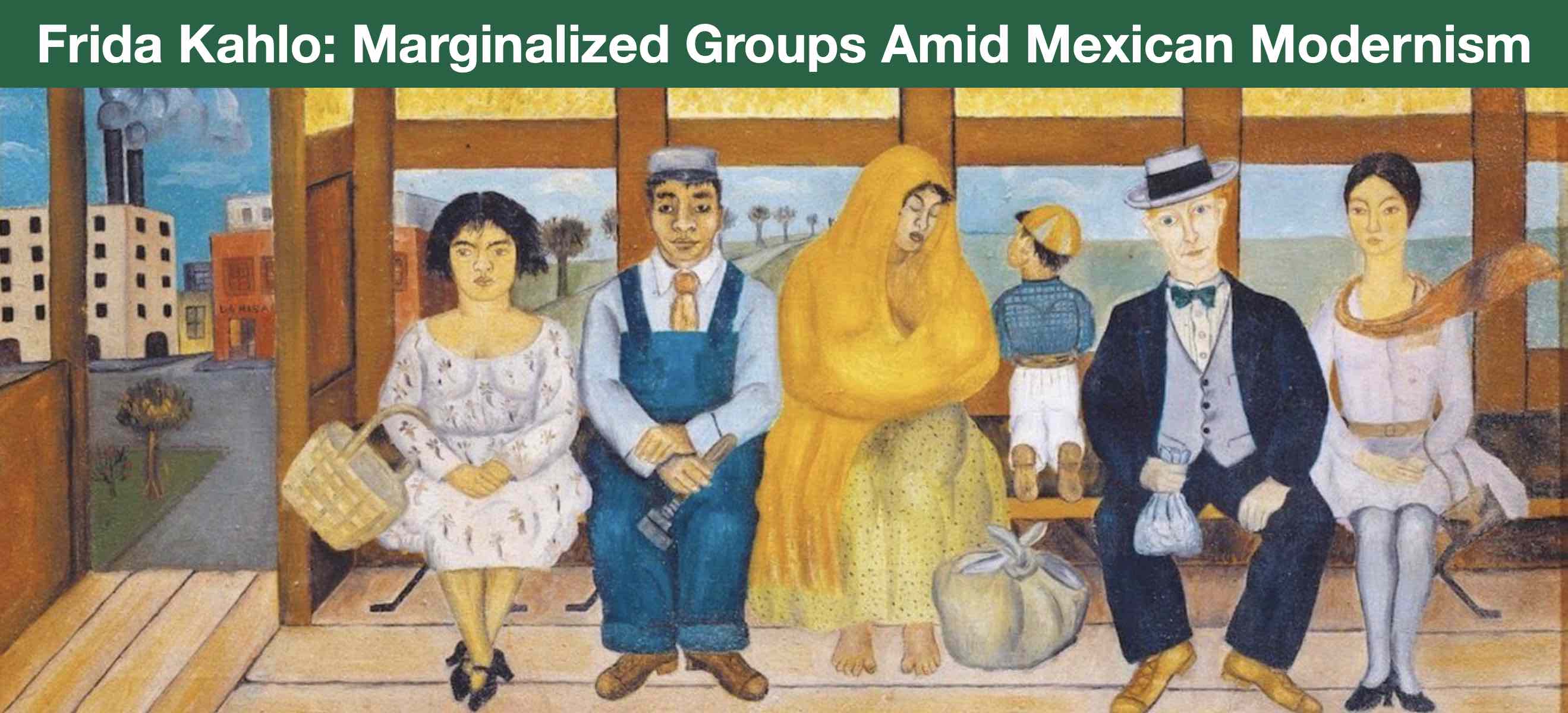
Background ~ "The Bus"
The Mexican Revolution was a ten-year (1910-1920) brutal civil war that involved multiple assassinations and the overthrow of a 30-year dictatorship. After it ended, there was turmoil in the new constitutional republic. Artists introduced an artistic era known as Mexican Modernism, which combined traditional and modern ideas. This brought optimism and unification to the citizens. Frida Kahlo was an influential contributor because she incorporated traditional symbols and addressed controversial topics, which became turning points in history.
Kahlo’s memory of the Mexican Revolution
Video credit: “Frida Kahlo…Between Passion and Pain,” words from the Diary of Frida Kahlo c. 1954
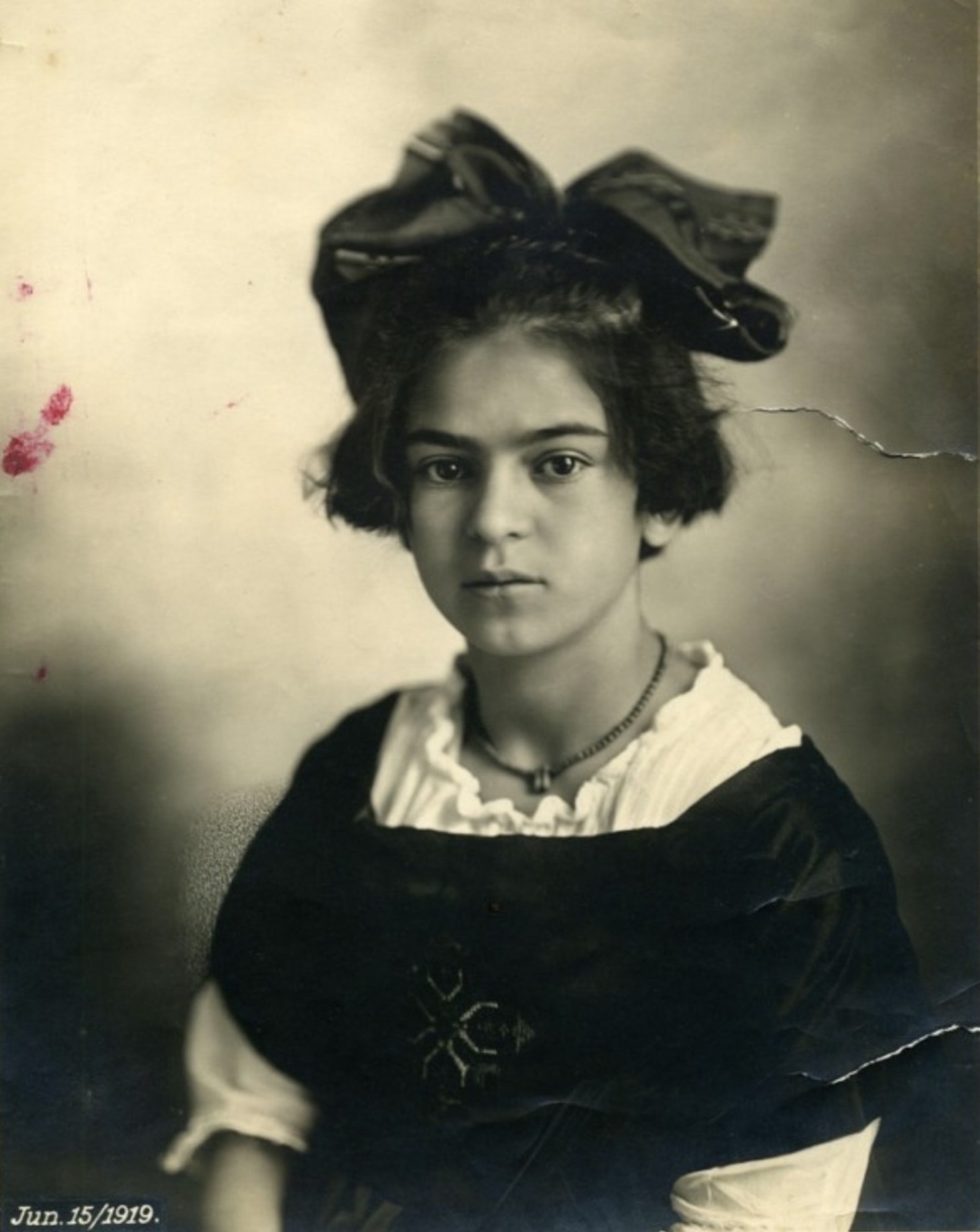
“Frida Kahlo at age 12,” photo credit: Guillermo Kahlo, 1919
At six years old, Kahlo suffered from polio, which inspired her to become a doctor. When polio withered her leg, other children teased her about it.
Access to higher education was uncommon for women in the 1920s. Frida Kahlo was one of 35 women accepted into the National Preparatory School with 2,000 male students.
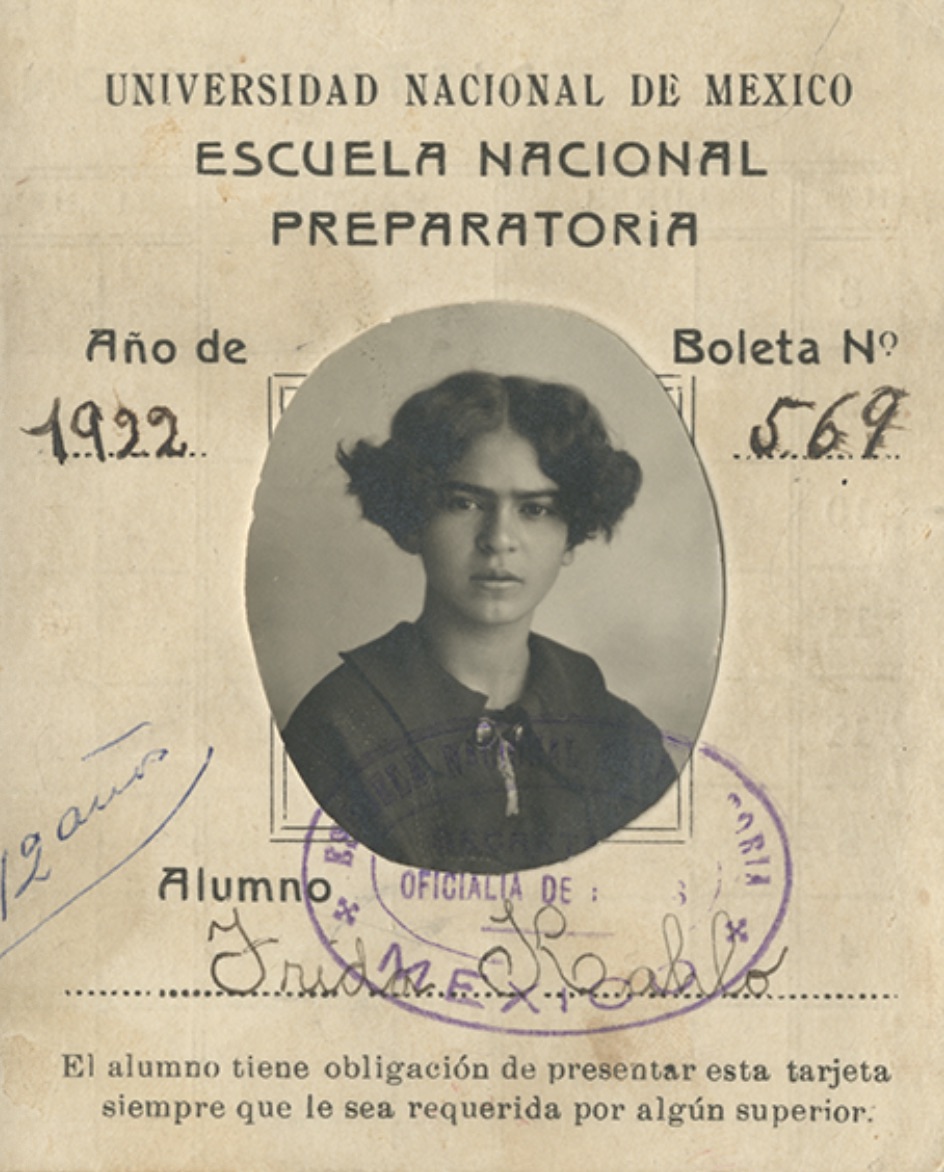
“Frida Kahlo’s report card at the National Preparatory School,” Museo Frida Kahlo, 1922
“Frida’s childhood friend, the painter Aurora Reyes, says: ‘We were quite cruel about her leg. When she was riding her bicycle, we would yell at her, ‘Frida, pata de palo!’ [Frida, peg leg], and she would respond furiously with lots of curses.” from “Frida” by Herrera, 1983
In 1925, a bus crash injured Kahlo, presenting her with life-long obstacles. This turning point in her own life prevented her from continuing her medical studies. While bedridden, she discovered a passion for art. Subsequently, she married the famous Mexican muralist Diego Rivera.
Header artwork credit: Frida Kahlo, “The Bus” 1929